
Africa’s People: Ethnic Groups That Shape The Continent (Central Africa)
 FN Educational Resources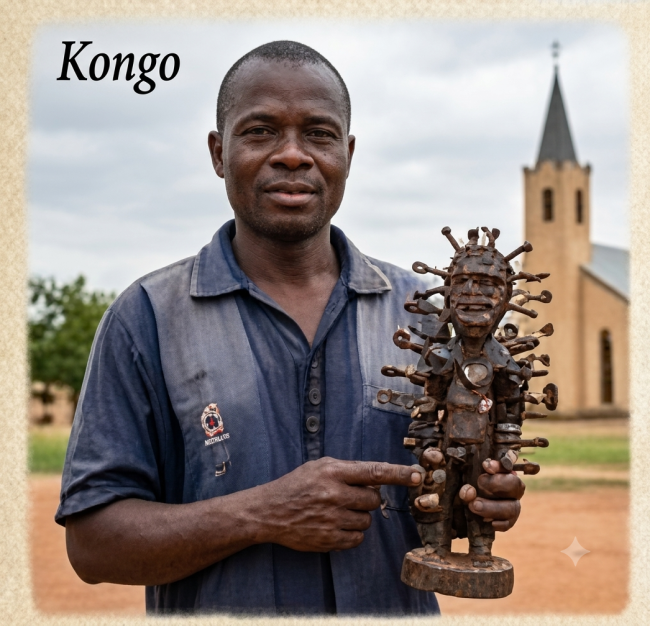
Central Africa’s Forest Kingdoms and Ancient Peoples
The Kongo — Africa’s First Diplomats
In the 14th century, the Kingdom of Kongo rose to power on the Atlantic coast of Central Africa. Its people, the Kongo, now number around 10 million across the Democratic Republic of Congo, the Republic of Congo, and northern Angola.
What makes the Kongo remarkable is their early engagement with the wider world. When Portuguese ships arrived in 1483, the Kingdom of Kongo established formal diplomatic relations — not as a subject state, but as an equal. Kongolese ambassadors visited European courts. The king converted to Christianity and corresponded directly with the Pope. Their spiritual art tradition, including the minkisi power figures, remains one of the most powerful in African history.
The Kingdom of Kongo ran a sophisticated professional economy. Raffia cloth — woven from palm fibre — was the primary currency and a major export, produced by specialist weavers in quantities substantial enough to circulate across Central Africa. Kongo smiths worked copper and iron for both tools and prestige objects. The kingdom maintained a professional class of provincial governors, tax collectors, and military commanders who administered a centrally governed state covering much of modern-day northern Angola and western DRC. A class of professional religious specialists managed the minkisi — the power objects that mediated between the living and the dead — making ritual expertise a formal profession with real political influence.
The Luba — Masters of Memory
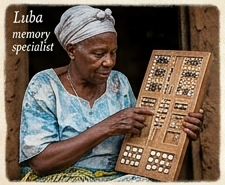
Deep in the southern DRC, the Luba built a highly centralised kingdom that pioneered something unique: the lukasa memory board. These hand-held wooden objects, embedded with beads and shells, encoded royal histories, genealogies, and governance protocols. Only trained specialists could read them. The Luba Kingdom rose to prominence around the 6th to 9th centuries AD and became one of Central Africa’s major powers. Today the Luba number around 6 to 7 million people.
The professional readers of the lukasa memory board — called the mbudye — were among Africa’s most distinctive knowledge workers: a trained class of memory specialists who held the state’s institutional knowledge in their hands and heads. Beyond them, the Luba Kingdom sustained professional ivory carvers, copper workers, and court sculptors who produced headrests, staffs, and bowls of extraordinary refinement. Control of the copper belt and the ivory trade made the Luba kingdom wealthy, sustaining a court economy of artisans, administrators, and military specialists.
The Fang — Guardians of the Ancestors
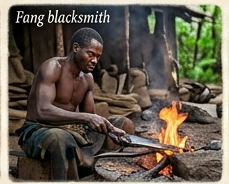
The Fang people of Equatorial Guinea, Gabon, and southern Cameroon guard their dead. Literally. Their reliquary sculptures — carved wooden heads and figures placed atop baskets of ancestral bones — so captivated Picasso and Braque in early-20th-century Paris that they helped ignite the Cubist movement. The Fang number around 1.5 million today, organized into strictly patrilineal clans.
Fang professional life centred on forest skills: hunting, iron smelting, and the carving of wood and ivory. Their blacksmiths held elevated social status, producing tools, weapons, and ceremonial objects that circulated as bride wealth and trade goods across the forest zone. The byeri reliquary specialists — the carvers and keepers of the ancestral sculptures — occupied a hereditary professional role that combined artisanal skill with spiritual authority. Elephant hunting, practiced by specialist teams, provided both food and the ivory that connected Fang communities to the wider Atlantic and overland trade networks.
The Mbuti — Voices of the Forest
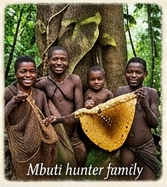
In the Ituri Rainforest of the DRC live some of Africa’s oldest inhabitants: the Mbuti. They are a pygmy hunter-gatherer people whose population is estimated at around 30,000 to 40,000 today. Genetic studies suggest their ancestors diverged from other African populations more than 60,000 years ago.
The Mbuti do not merely live in the forest. They consider it sacred. Their polyphonic vocal music — intricate layered harmonics — is tied directly to spiritual communication with the forest itself. Their egalitarian social structure, with no chiefs or hereditary leaders, has sustained them for millennia.
The Mbuti’s professional knowledge is ecological. They are among the world’s most skilled hunters, using nets, bows, and spears in coordinated group techniques that require deep knowledge of animal behaviour, forest terrain, and seasonal patterns. They traded forest products (honey, meat, and medicinal plants) with neighbouring farming communities in exchange for iron tools and agricultural produce, occupying an ecological niche no other group could fill. Their healers held specialist knowledge of the forest’s pharmacopoeia, using plants that modern ethnobotanists are still cataloguing. In a society without chiefs, expertise (in hunting, healing, or music) was the primary form of social capital.
Next, look out for the people groups of South Africa and East Africa.
Population figures are approximate and drawn from current ethnographic and census data. Estimates vary across sources due to the complexity of ethnic identity, cross-border populations, and incomplete census data in some regions.
Recommended
People Groups of North Africa, West Africa
