
Kingdoms & Monuments: Royal Court of Tiébélé (Burkina Faso)
 Ibironke Babalola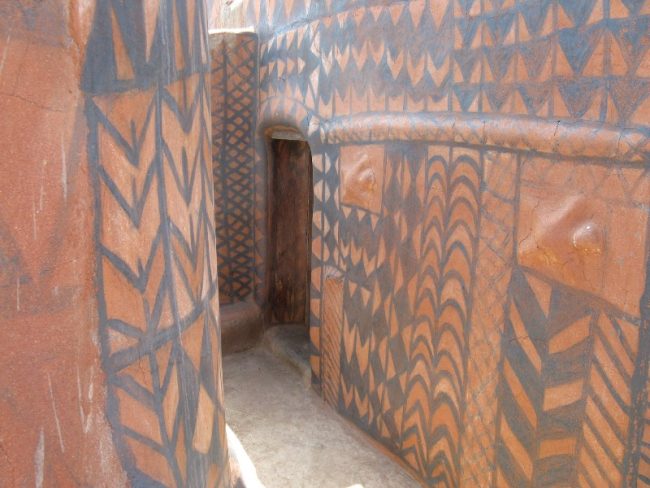
Discover the Royal Court of Tiébélé, where Kassena women turn earthen architecture into a vibrant cultural monument through stunning Gurunsi wall paintings.
In the heart of southern Burkina Faso lies a village that defies the passage of time. The Royal Court of Tiébélé is a collection of buildings that’s also a canvas of history. Here, the Kassena people have preserved an architectural style that blends raw earth with sophisticated art. This 1.84-hectare complex serves as the residence for the traditional chief, the Pé, and stands as a vibrant, living cultural monument.
The Foundation of the Earth
The Kassena are masters of earthen construction. They use a technique known as pisé or rammed earth. Builders mix local clay, straw, and cow dung to create thick, durable walls. These materials provide exceptional thermal inertia, absorbing the blistering daytime heat and releasing it slowly during the cool nights.
Kassena architecture is also a study in social hierarchy and defensive strategy. The houses are built with low, narrow entrances. This design requires visitors to crouch, effectively neutralizing potential intruders. The shapes of the buildings tell a story of their inhabitants. Quadrangular homes are for young married couples; circular spaces for adolescent and unmarried men; and the distinctive figure-eight (or clover-shaped) structures (known as Dinian) serve as the sacred quarters for the elderly, widows, unmarried women, and small children.
A Matriarchal Masterpiece
While the men build the structures, the women of Tiébélé are the true architects of its beauty. After the rainy season, the village transforms into an open-air studio. This tradition of wall painting is a communal ritual that strengthens social bonds.
The women use natural pigments sourced from the land. Black comes from pulverized graphite or volcanic stone. White is derived from kaolin or chalk. Red is created using laterite soil. To protect these masterpieces from the elements, the artists apply a natural varnish made from boiled neré (locust bean) pods. This lacquer creates a protective sheen that shields the murals from wind and rain.
Symbols of a Civilization
The geometric patterns decorating the walls are more than just art; they are a visual language. There are at least 17 recognized motifs, each carrying a specific cultural meaning. Zig-zags are known as the “Path of the Ancestors,” representing the flow of water and life. Diamonds and Triangles mimic the scales of a crocodile or tortoise — animals revered for their resilience and protection. And the Tana Pattern — vertical white stripes that resemble the woven strips of a traditional man’s smock.
A Living Monument Under Protection
The Royal Court of Tiébélé is more than 500 years old. Historical records and oral traditions indicate that the complex was established in the 16th century. It was founded following the migration of the Kassena people to the region, and it has served as the official residence of the Pé and the spiritual heart of the community ever since.
Why It Doesn’t “Look” 500 Years Old
Because the structures are made of pisé (rammed earth, straw, and cow dung), they are susceptible to erosion from the heavy West African rains.
To preserve the palace for half a millennium, the community has engaged in a continuous cycle of renewal. The walls are re-plastered regularly to maintain their integrity. The famous geometric paintings are reapplied by the village women as a communal project, ensuring the “monument” is constantly reborn rather than slowly decaying.
Unlike other ancient ruins, this extraordinary continuity of living tradition is precisely what caught UNESCO’s attention. In recognition of its unique architectural value and the unbroken transmission of Kassena cultural practices, the site was officially inscribed on the UNESCO World Heritage List in 2024 — celebrated as an outstanding illustration of a living cultural tradition and a vital symbol of Kassena identity.
Today, Tiébélé stands as a beacon of African heritage. It reminds the world that architecture is not just about survival; it is about identity, community, and the enduring power of the earth.
#Tiebélé #BurkinaFaso #AfricanArchitecture #KassenaCulture #UNESCO #LivingHistory #GurunsiArt #SustainableBuilding
