
Kingdoms and Monuments: Moro-Naba Palace, Wagadugu (Burkina Faso)
 Support Team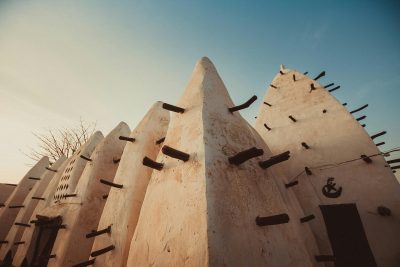
Africa has always built with problem-solution architecture as the core of its approach.
Some cities carry their history quietly. Wagadugu does not. Walk its streets and you feel centuries pressing through the dust. The drumbeats, the palace gates, the masks locked in sacred storage — all of it points back to one thing: the ancient Mossi kingdom that gave this city its name and its soul.
This is a story the heritage of Wagadugu. One that moves and speaks. And one that has survived everything thrown at it.
How Wagadugu Was Born
The story begins with a princess on horseback.
According to Mossi oral tradition, a warrior princess named Yennenga fled the Dagomba kingdom of northern Ghana sometime between the 11th and 15th centuries. Her father, King Nedega, refused to let her marry — she was too valuable as a fighter. So she rode north, alone, into the savanna.
She met Rialé, a solitary elephant hunter of the Mandé people. They built a life together. Their son, Ouedraogo — meaning “stallion” — became the founder of the first Mossi kingdom, Tenkodogo. His descendants pushed further north and west.
By the 14th century, Mossi warriors swept into a settlement called Wagadugu and conquered it. They transformed it. By around 1495, Wagadugu had become the most powerful of all the Mossi kingdoms — the seat of the Mogho Naaba, the emperor of the Mossi world.
The name Wagadugu endured. French colonizers respelled it as Ouagadougou. The city kept its soul.
The Walls That Shaped a Kingdom
Wagadugu was not just a seat of ceremony. It was a built environment — shaped by hands, earth, and intention.
By the 17th century, the city’s compounds and walls formed a defensible urban core. Thousands of people lived and worked within it. Blacksmiths smelted iron in specialized lineages. Traders channeled kola nuts, livestock, and grain through the city’s markets. The Mogho Naaba’s administration extended outward through appointed governors — the Nakomse — who ruled provinces in the emperor’s name.
The architecture was Sudano-Sahelian: mud brick, organic materials, thick walls that absorbed the Sahel’s punishing heat. Buildings breathed. They adapted. The same tradition shapes Ouagadougou’s Grande Mosquée today — its mud brick walls and protruding wooden torons a direct echo of centuries-old building knowledge.
These were not primitive structures. They were sophisticated responses to climate, community, and power. They encoded the values of a civilization.
The Moro-Naba Palace: A Living Monument
At the center of Ouagadougou stands the Mogho-Naaba Palace. It is not a museum. The emperor of the Mossi lives and holds court here. His authority carries no constitutional power in modern Burkina Faso. But his moral weight is enormous.
Politicians seek his blessing. Communities bring him their disputes. In times of national crisis, people look to the palace for steadiness.
Every Friday morning, the palace becomes a stage for one of West Africa’s most extraordinary living rituals — the Moro-Naba Ceremony. The emperor appears in full regalia, mounted and ready as if to ride to war. His chiefs beg him to stay. He dismounts. He returns inside. The ceremony re-enacts an ancient moment of loyalty and restraint, performed week after week, generation after generation.
It has been performed for centuries. It continues today.
Visitors who arrive early on Friday mornings witness something rare: a living tradition that has never been interrupted, never been staged for tourists, never been stripped of its meaning. This is Wagadugu’s heritage in motion.
Sacred Art and the Nyonyose
The Mossi built their legacy in walls and palaces; in wood and iron.
The Nyonyose — also called the Tengabisi, meaning “children of the earth” — are the original inhabitants of the Mossi plateau. They hold the spiritual heart of Mossi society. They create and guard the sacred masks used in ancestral ceremonies. These are not decorative objects. Each mask carries meaning. Each one connects the living to those who came before.
The Mossi National Museum in Ouagadougou houses over 7,500 artifacts. Its main hall showcases traditional Mossi masks — each one a window into stories of ancestral spirits and community ritual. The royal artifacts section displays items from the kingdoms that once ruled the region, including Wagadugu itself.
Only the Nyonyose use masks in traditional Mossi society. The Nakomse — the noble conqueror class — use sculptural figures in political celebrations. This careful division of artistic practice reflects something deep: in Mossi society, every group has its role, its sacred responsibility, its distinct contribution to the whole.
FESPACO and the Eternal Stallion of Yennenga
Every two years, Ouagadougou becomes the film capital of Africa. FESPACO — the Pan-African Film and Television Festival — draws over 100,000 visitors and screens more than 200 films from across the continent.
Its top prize is the Étalon d’Or de Yennenga. The Golden Stallion of Yennenga.
The trophy is a horse — proud, rearing, fierce — named in honor of the warrior princess whose flight across the savanna founded the Mossi dynasty over a thousand years ago. Filmmakers from Lagos to Nairobi to Dakar compete for it. Winning it is one of the highest honors in African cinema.
The festival is no accident of geography. It was deliberately planted here, in Wagadugu, in this city where history and creativity have always lived side by side. Every golden stallion awarded is another thread connecting the present to Yennenga’s story. Her name keeps riding forward.
Resistance, Colonialism, and Continuity
The French arrived in Mossi territory in 1896 and 1897. They crushed the kingdoms militarily, stripped the Mogho Naaba of political power, and imposed forced labor on thousands of Mossi people. Many were sent to plantations in Côte d’Ivoire. Roads and railways were built on Mossi backs.
The colonial administration tried to replace Wagadugu’s identity with French Upper Volta. They renamed things, restructured things, taxed things into submission.
It did not work — not fully.
The Mossi kept their language. They kept their ceremonies. They kept their palace. They kept their social structures. When Burkina Faso gained independence in 1960, the Mossi re-emerged exactly as they had always been: the dominant cultural force in their own land.
The Mogho Naaba never disappeared from Ouagadougou. He was there before the French came. He was there when they left. He is there now.
Wagadugu Endures Still, Today
Ouagadougou is one of West Africa’s fastest-growing cities — home to over 3.5 million people. It faces real pressure: rapid urbanization, economic strain, and ongoing instability in the broader Sahel region. But Wagadugu’s heritage gives the city something that urban planning cannot manufacture: identity. Roots. A reason to hold on.
The Moro-Naba still mediates conflicts. The masks still come out for ceremonies. The Friday ritual still draws crowds to the palace gates. FESPACO still fills the streets with cinema and celebration every other year. The Mòoré language still flows through every market, every neighbourhood, every conversation that matters.
The Mossi have outlasted the Mali Empire, the Songhai Empire, and French colonialism. They did it without abandoning who they are.
Wagadugu is not a monument frozen in stone. It is a living city that has carried its ancient name — transformed but unbroken — into the modern world. Come to Ouagadougou. Walk toward the palace on a Friday morning. Listen to the drums. Watch the emperor appear.
You are not watching history. You are standing inside it.
Hashtags: #Wagadugu #Ouagadougou #BurkinaFaso #MossiKingdom #WestAfrica #AfricanHistory #MoroNaba #Yennenga #FESPACO #AfricanHeritage #BlackHistory #AfricanKingdoms #Feelnubia #WestAfricanCulture #AfricanTravel #SudanoSahelian #MossiPeople #AfricanCeremonies
Read about more Kingdoms and Monuments
