
Africa’s People: Ethnic Groups That Shape The Continent (West Africa)
 FN Educational Resources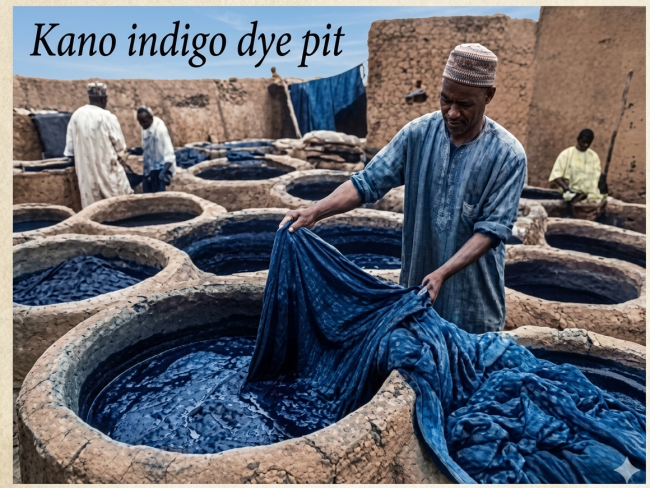
The Heartland of Empire
The Hausa — Merchants of the Sahel
No group commands the Sahel’s trade networks quite like the Hausa. With around 86 million people worldwide, they are one of Africa’s largest ethnic groups. Most live in northern Nigeria and southern Niger, but Hausa traders and settlers reach across 15 countries.
The Hausa have built walled city-states called birni since at least the 10th century AD. Their Afroasiatic language serves as West Africa’s primary commercial lingua franca, spoken by millions as a second language across the entire Sahelian belt from Senegal to Sudan.
Their professional world was organized into clearly defined guilds. Hausa society had specialist dyers working the famous indigo pits of Kano — pits that have operated continuously for over 500 years and still function today. Leather workers produced the Morocco leather that reached Europe via the Saharan caravan trade, often mis-labelled as North African in origin. Weavers, blacksmiths, butchers, and praise singers each had hereditary professional identities. Long-distance merchants called attajiri travelled thousands of miles, extending credit and managing complex trade networks that predated European commercial capitalism by centuries. The Hausa city-states — Kano, Katsina, Zaria, and others — were manufacturing and commercial hubs whose cloth and leather exports circulated from the Mediterranean to the forests of the Gulf of Guinea.
The Yoruba — Builders of Cities
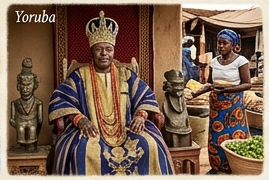
The Yoruba have lived in southwestern Nigeria since at least 9,000 BC — evidence from skeletal remains found at Iwo-Eleru in Ondo State confirms their deep roots. Today they number roughly 53 million people across Nigeria, Benin, and Togo, making them one of Africa’s largest groups.
They built a sophisticated civilization of urbanized city-states and kingdoms. The Oyo Empire, at its height, controlled territory rivalling European nations of the same era. The Yoruba also created some of the world’s most extraordinary bronze and terracotta art. Most remarkably, their spiritual system travelled across the Atlantic during the slave trade and transformed into Santería, Candomblé, and Vodou in the Americas.
The Oyo Empire’s wealth rested on a professional cavalry force and a tightly managed trade network that taxed goods moving between the forest interior and the coast. Yoruba artisans were among Africa’s finest metalworkers — the bronze heads of Ife, cast using lost-wax techniques as refined as anything in Renaissance Europe, speak to a professional class of court sculptors who served Yoruba kings for generations. Blacksmiths, cloth weavers producing the distinctive Aso-oke fabric, and herbalist-physicians called onísègùn all occupied defined professional roles within Yoruba urban society. The market — controlled and managed by women traders called ìyálójà — was the engine of Yoruba city life, and the profession of merchant was one its most respected.
The Igbo — Champions of Democracy
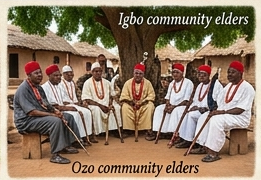
East of Yorubaland in southeastern Nigeria, the Igbo built something rare in pre-colonial Africa: a decentralised, democratic republic. With no kings or centralized monarchies, Igbo village assemblies governed themselves through elected councils and community consensus. Archaeological evidence traces Igbo settlement in the region back to at least 3,000 BCE.
Today roughly 45 million Igbo people live primarily in Nigeria. They have shaped modern African literature (Chinua Achebe’s Things Fall Apart is arguably the continent’s most read novel) and they drive significant sectors of Nigeria’s commercial economy.
The Igbo’s decentralized structure cultivated a fiercely entrepreneurial professional culture. The bronze smiths of Igbo-Ukwu (whose extraordinary 9th-century castings were among the finest in the ancient world) demonstrate a specialist artisan class of remarkable sophistication operating centuries before European contact. Long-distance trading was a primary Igbo profession; the Aro Confederacy, a powerful Igbo merchant network, controlled much of southeastern Nigeria’s commerce from the 17th century onward. Title societies like the Ozo functioned as professional and civic guilds, conferring status on successful farmers, traders, and community leaders. Today that entrepreneurial tradition persists — Igbo traders and manufacturers are central to Nigerian commerce from Lagos to Onitsha.
The Fulani — The Nomads
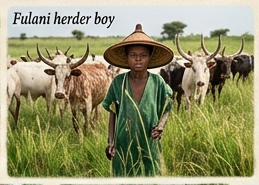
With a population estimated at around 40 million, they range across more than 20 countries from Senegal to Sudan — the world’s largest nomadic pastoral group. Tracing their ultimate origins is contested, but they were well established in West Africa by the 5th century AD.
They changed the continent’s religious map. Starting in the 18th century, Fulani scholars launched a series of Islamic jihads that established vast new states across the Sahel. The Sokoto Caliphate, founded in 1804 in present-day Nigeria, became one of the largest states in African history. At its peak, it governed over 10 million people.
The primary Fulani profession was cattle herding — and it was practiced at a scale and sophistication that made them indispensable across the entire Sahel. Fulani herders supplied beef, milk, and hides to the sedentary farming communities they moved among, operating a complementary economic relationship that was mutually dependent even when it was tense. A separate class of settled Fulani, the Torodbe, became professional Islamic scholars and clerics — the intellectual architects of the 18th and 19th-century jihad states. The Sokoto Caliphate they built was administered by an emir class drawn from Fulani families, running a bureaucratic empire with courts, taxation, and a legal system grounded in Islamic scholarship.
The Mandinka — Keepers of Memory
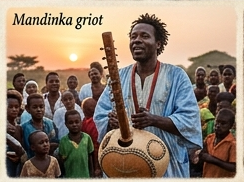
The Mandinka descend directly from the founders of the Mali Empire, one of history’s wealthiest states. Mali’s Emperor Mansa Musa, a Mandinka ruler, is often described as the richest person who ever lived. Today around 1.5 to 2 million Mandinka live across Senegal, The Gambia, Guinea, Guinea-Bissau, and Mali.
Their greatest cultural institution is the griot — a hereditary oral historian, poet, and musician. Griots memorize and perform centuries of royal genealogies and epic histories in song. Without them, much of West Africa’s pre-colonial history would have been lost.
The Mali Empire’s wealth was built on the control of three commodities: gold from the Bambuk and Bure fields, salt from the Saharan mines, and the trade routes connecting them. Mandinka merchants called dyula were professional long-distance traders who carried goods across vast distances, establishing trading colonies as far east as present-day Ghana and Côte d’Ivoire. Beyond trade, the empire employed a professional class of administrators, military commanders, and Islamic jurists who governed a state stretching from the Atlantic coast to the bend of the Niger River. The griot, meanwhile, was not merely a performer but a professional archivist and diplomat — someone whose mastery of genealogy gave them real political power in a society where lineage determined everything.
The Akan — Gold and Wisdom
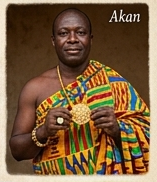
The Akan dominate Ghana and the Ivory Coast. Estimated at around 25 million people, they trace their origins to migrations from the ancient Ghana Empire in the western Sudan. They built the Ashanti Empire, whose wealth from gold mining dazzled European traders from the 17th century onward.
The Akan are famous for three things above all: a matrilineal social system in which identity and inheritance pass through the mother’s line; the Adinkra visual symbols that encode philosophical concepts; and the stunning kente cloth whose patterns carry meaning.
Gold was the foundation of Akan professional life. Akan goldmiths — working under the authority of the Asantehene, the Ashanti king — produced some of Africa’s most technically refined metalwork, including the Golden Stool of Ashanti, the sacred symbol of the nation’s soul. The profession of goldsmith was simultaneously technical and spiritual. The Ashanti Empire also supported a professional military, a class of state administrators called the akyeame (royal linguists who interpreted and mediated the king’s speech), and a sophisticated bureaucracy that managed tribute from a wide network of vassal states. Kente weaving was a male profession, practiced by specialists who worked complex looms to produce the silk-and-cotton cloth originally reserved for royalty.
Next, look out for the people groups of South Africa and East Africa.
Population figures are approximate and drawn from current ethnographic and census data. Estimates vary across sources due to the complexity of ethnic identity, cross-border populations, and incomplete census data in some regions.
Recommended
People Groups of North Africa, Central Africa
