
Diversity in the African DNA: From ‘Ghost’ to Happiness Genes
 Ibironke Babalola
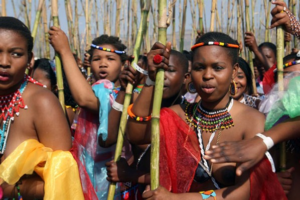
African DNA holds the oldest and richest story of our species. Every human alive today traces back to Africa. Yet the people who stayed kept far more of that story than the people who left. Their genetic codes reveal ancient splits, a mysterious ghost ancestor, powerful defenses against disease and an intriguing clue about happiness. Here is what scientists know, and what they are still working out.
African DNA Is the Most Diverse on Earth
Modern humans arose in Africa at least 300,000 years ago. For most of that time, they lived only there. Their populations grew large. They split into many groups. Each group gathered its own mutations. Then, about 50,000 to 70,000 years ago, a small group left the continent. Their descendants settled the rest of the world. They carried only a slice of Africa’s variation. Scientists call this the out-of-Africa bottleneck.
The result is clear. Africa holds more genetic variation than any other continent. Non-African populations carry mostly a subset of it. A landmark 2009 study in Science sampled 121 African populations. It found around 14 distinct ancestral clusters. They matched language families and geography proving that Africa is not one genetic block. It is a mosaic.
Diversity has a precise meaning here. It describes how many genetic variants a population carries, and how old they are. On average, two people from within Africa differ slightly more at the DNA level than two people from Europe or Asia. This gap is modest, as most human variation exists within every population, and on every continent. All humans share nearly all of their DNA. Africa’s edge therefore comes from history, not from a difference in kind.
Older Than the Exodus
Some African lineages split off very early. The Khoe-San peoples of southern Africa are a famous example. Genetic studies date their divergence from other humans to somewhere between 100,000 and 300,000 years ago. Once again, the exact date depends on how the data was analysed.
Central African rainforest foragers tell a similar story. Groups such as the Mbuti, Baka and Biaka also carry very old lineages. Put simply, Africa holds several ancient branches of the human family tree. Each one preserves a distinct piece of our shared past.
The ‘Ghost’ in West African DNA
Now comes the mystery. Non-Africans carry about 1 to 2 percent Neanderthal DNA. Africans carry far less. One 2020 study put it near 0.3 percent, attributed by scientists to return migration of European-Asians back into Africa. But African genomes hold another secret. In 2020, researchers Arun Durvasula and Sriram Sankararaman studied Yoruba, Esan, Mende and Gambian Mandinka genomes. They found traces of an archaic population that nobody has identified. Estimates range from 2 to 19 percent, depending on the model.
This lineage seems to have split away before modern humans and Neanderthals parted ways. It mixed with the ancestors of these West Africans much later, within roughly the last 124,000 years. Scientists call it a ‘ghost’ population, as no fossil or genome has been linked to it. Tropical climates destroy ancient DNA fast. So researchers work backward from living people.
The picture is still blurry. Here is why. Early humans in Africa did not live as one big group. They lived in several groups that stayed apart for a very long time. Now and then, these groups met and mixed. That history can leave a confusing trail in our DNA. Some stretches look extremely old and different. Scientists first read that as proof of an outside ancient group. But a 2023 study in Nature showed that old divisions inside Africa can leave the same trail.
Think of a big family whose branches lived apart for generations, then reunited. Some cousins would look oddly distant. You might guess that strangers had joined the family. The real cause might simply be the family’s own long separation. So scientists cannot yet tell the two stories apart. The actual answer is a range, not a single number.
Shaped by Survival
African genomes help medicine in a special way. Their populations are old and large. Over many generations, recombination has chopped their DNA into short segments. Short segments act like a finer map. Scientists can separate a true disease-causing variant from the neighbors that travel with it. That makes African genomes powerful tools for finding the genes behind traits and diseases.
Africa’s environment left clear marks on its people’s genes. Four examples stand out: Sickle cell trait (HbS), which protects against falciparum malaria; Duffy-null, which shields carriers from vivax malaria, and APOL1 variants that guard against a form of sleeping sickness. They also raise kidney disease risk. There is also the Lactase persistence, which lets pastoralist groups digest milk as adults. Different mutations arose in different regions. Each case shows the same pattern: Strong pressures such as disease and diet reshape gene frequencies. Local conditions write themselves into DNA.
FAAH Gene and the Happiness Debate
There is another thread that sits at the edge of the evidence. It involves a gene called FAAH. FAAH makes an enzyme that breaks down anandamide. This molecule is linked to pleasure and pain relief. A common variant weakens the enzyme. Carriers of the A version tend to have higher anandamide levels.
In 2016, researchers Michael Minkov and Michael Harris Bond tested a bold idea, comparing national happiness surveys with national A-allele frequencies. The surveys came from the World Values Survey, from 2000 to 2014. They reported a strong, steady link.
Their main findings showed that Ghana, Nigeria, Mexico and Colombia had high A-allele frequencies. They also had high shares of people who described themselves as “very happy”. Iraq, Jordan, China, Thailand and Taiwan, which had the lowest frequencies ranked low on happiness. Northern Europeans showed higher frequencies and higher happiness than Central and Southern Europeans. It turned out that while climate mattered, wealth and rule of law showed no significant link.
Minkov suggested that tropical and equatorial environments may have favored the A allele, suggesting that exposure to sunlight may have had a long-term effect. In his view, it may offset environmental stress. Nobody has tested that idea yet.
Treat the result as a lead, not a verdict. It compares countries. It relies on estimated allele frequencies. And it uses a survey answer that people interpret differently across cultures. Ancestry also travels with history and geography, so the allele may stand in for other factors. The authors said further research must confirm the link. They also stressed that national happiness still rises and falls with circumstances. No conclusion was reached about individual happiness.
The Data Gap
Here is the biggest problem. African ancestry makes up only about 2 percent of participants in genome-wide studies. European ancestry makes up around 78 percent. A 2019 review in Cell made that point sharply. Polygenic scores and medical tools work best for the groups they were built on. It is an important observation that the people groups with the most genetic diversity is the least studied.
Closing the gap would sharpen every question in this article. It could reveal who the ghost ancestors were. It could pin down how common FAAH variants really are. And it could improve health care for hundreds of millions of people.
African DNA is not just the root of the human tree. It is the tree’s thickest, oldest and most varied part. Ancient lineages, ghost ancestors, disease defenses and a happiness hypothesis all live in it. Much remains unknown. But one fact stands firm. To understand humanity, scientists must study Africa first.
