
Ancient Nok Civilization: Africa’s Iron Age Pioneers
 FN Educational Resources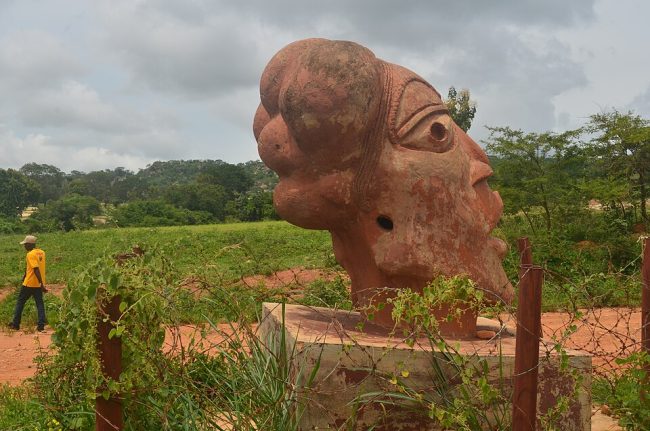
Discover the Nok civilization — ancient Nigeria’s iron-smelting pioneers and master sculptors whose terracotta art shaped West Africa’s cultural legacy for millennia.
Long before the great kingdoms of Ife and Benin rose to fame, a remarkable civilization quietly shaped the heart of West Africa. The Nok people flourished in what is now central Nigeria from around 900 BCE to 200 CE. They left behind no written records. Yet their iron tools and breathtaking clay sculptures speak louder than words.
The Nok culture is one of sub-Saharan Africa’s earliest complex societies. It spread across a vast area of central Nigeria, roughly the size of Portugal. Scholars named it after the small Ham village of Nok in southern Kaduna State — the place where its secrets first came to light.
The Accidental Discovery That Shocked the World
In 1928, a tin miner named Colonel Dent Young was working an alluvial mine near the village of Nok. His equipment pulled up something extraordinary — a terracotta head buried 24 feet underground. Young handed it over to the Museum of the Department of Mines in Jos. The world barely noticed.
Then, in 1943, another fragment surfaced. A mine clerk had used a terracotta head as a scarecrow in his yam field. British archaeologist Bernard Fagg saw it and recognized its significance immediately. He set off across central Nigeria, gathering over 200 similar pieces. A lost civilization had been re-discovered.
Masterpieces in Clay
The Nok are most celebrated for their terracotta sculptures. These are among the oldest known figurative art in sub-Saharan Africa. The figures are striking and unmistakable. They show humans and animals rendered with elongated heads, elaborate hairstyles, and distinctive triangular or elliptical pierced eyes and mouths.
Some figures are life-sized. Some are even larger. The craftsmanship is remarkable for a society that existed over two millennia ago.
Why did the Nok create them? Scholars are still debating this. Research by archaeologist Peter Breunig of Goethe University links many sculptures spatially to burial sites, suggesting a role in funerary culture. Others propose they served religious shrines, harvest rituals, or ceremonies connected to iron smelting. When 13 iron furnaces were excavated at the Nok site of Taruga, terracotta figurines were found right inside and around them — suggesting the sculptures may have been objects of spiritual power during metalworking.
Iron Age Innovators
Here is where the Nok truly astonish. They bypassed the Bronze Age entirely. While other ancient societies progressed from stone tools to copper to bronze, the Nok leapt straight from stone to iron. That is a technological leap with no parallel in their region.
Iron smelting furnaces at Taruga have been carbon-dated to around 280 BCE, giving the Nok some of the earliest confirmed iron-smelting dates in sub-Saharan Africa. The culture is thought to have begun working iron from around 500–600 BCE, possibly earlier.
Nok blacksmiths used this technology to make iron axes, spearheads, and agricultural tools. These advances transformed food production and strengthened community defence. Farming became more efficient. Settlements grew. Society became more complex.
A Well-Organized Society
The Nok were not city-builders. They lived in hundreds of interconnected farming settlements spread across the savannah. Their staple crops included pearl millet and cowpeas.
Yet they were far from simple. Archaeological evidence points to a structured social hierarchy. Specialized artisans (potters, blacksmiths, sculptors) likely held distinct status. Evidence at sites like Taruga suggests a shrine-centred judicial system, where community decisions and conflicts may have been resolved in sacred spaces.
This was not a scattered collection of villages. It was an organized, interconnected society with shared culture, craft, and values.
The Mystery of the Disappearance
Around 200 CE (although some estimates stretch to 500 CE) the Nok civilization faded away. No single cause has been confirmed. Historians point to several possible culprits.
Climate change may have disrupted farming cycles. Deforestation is another serious theory. Producing charcoal for iron smelting required vast quantities of wood. Over centuries, this could have stripped the land bare and collapsed local ecosystems. Displacement by rival groups is also possible.
The Nok simply stopped. Their distinctive terracotta style disappeared from the archaeological record. Their settlements fell silent.
A Legacy That Never Truly Died
Although ancient Nok civilization has all but disappeared, its influence lives on. Scholars trace the artistic traditions of the later Ife and Benin Kingdoms (whose bronze and brass sculptures are now globally celebrated) back to Nok terracotta aesthetics. The stylization, the pierced features, the commanding human form: all carry echoes of Nok craftsmanship.
Today, Nok artefacts are preserved in premier museums around the world. Some have made their way back to Nigeria. The civilization that once lay buried beneath a yam field is finally getting the recognition it deserves.
Although it’s people dispersed, Nok civilization did not just survive history; it is still with us. While the ancient civilization that crafted the original Nok terracotta sculptures vanished over 1,500 years ago, remnants of their culture remain scattered across the Nok area in Kaduna State. However, the specific, traditional clay art-making technique of the original Nok people is historically extinct.
The ancient artistic tradition does not survive in a direct, unbroken lineage, but its legacy is actively preserved in archaeological evidence. The physical remnants (mostly scattered terracotta heads, beads, and iron-working tools) remain buried in the iron-rich soils of the region. The artifacts are largely protected under the jurisdiction of the National Commission for Museums and Monuments.
Art enthusiasts can view authentic, excavated artifacts alongside exhibits of Nigeria’s wider cultural heritage at the Kaduna Museum. On the contemporary art scene, modern Nigerian sculptors and students (particularly those trained at institutions like Ahmadu Bello University (ABU) in nearby Zaria) heavily draw inspiration from Nok stylizations (like the triangular eyes) in their own works. We are because they were.
Visit: Kaduna Museum, Nok Village, or Jos National Museum (home to the largest collection of Nok artifacts)
#NokCivilization #AncientNigeria #AfricanHistory #NokTerracotta #WestAfrica #IronAge #Feelnubia #NigerianHeritage #AfricanArt #AncientAfrica #Archaeology #BlackHistory
Recommended

