
Empire: Kush, Ancient Nubia’s Golden Empire That Ruled Egypt
 FN Educational Resources
Introduction: Africa’s Forgotten Superpower
Long before the modern world knew their names, the rulers of Kush commanded an empire that stretched from the heart of Africa to the Mediterranean Sea. For over 1,400 years, from 1070 BCE to 350 CE, this magnificent African civilization flourished along the Nile in what is now Sudan, creating architectural marvels, wielding military might, and producing some of history’s most remarkable leaders.
Yet the Kingdom of Kush remains one of history’s best-kept secrets. While Egyptian pharaohs captured global imagination, their southern neighbors and sometimes conquerors built more pyramids, developed their own writing system, and established a tradition of powerful female monarchs that was centuries ahead of its time.
Today, their monuments still stand in the Sudanese desert, waiting to tell their story.
The Rise of an Empire: When Nubia Conquered Egypt
The Birth of Kushite Power
The Kingdom of Kush emerged as a dominant force in the ancient world during the 8th century BCE. Far from being a peripheral state, Kush controlled crucial trade routes connecting sub-Saharan Africa with the Mediterranean world. Gold, ivory, ebony, incense, and exotic animals flowed through Kushite territories, generating immense wealth that funded grand architectural projects and military campaigns.
The Egyptians called this land “Ta-Nehesy,” meaning “the gold land,” recognizing the kingdom’s abundant precious metal deposits that rivaled their own operations. But Kush offered more than material wealth. The region became renowned for producing the ancient world’s finest archers, earning it another Egyptian designation: “the Land of the Bow.”
The 25th Dynasty: Black Pharaohs Rule Egypt
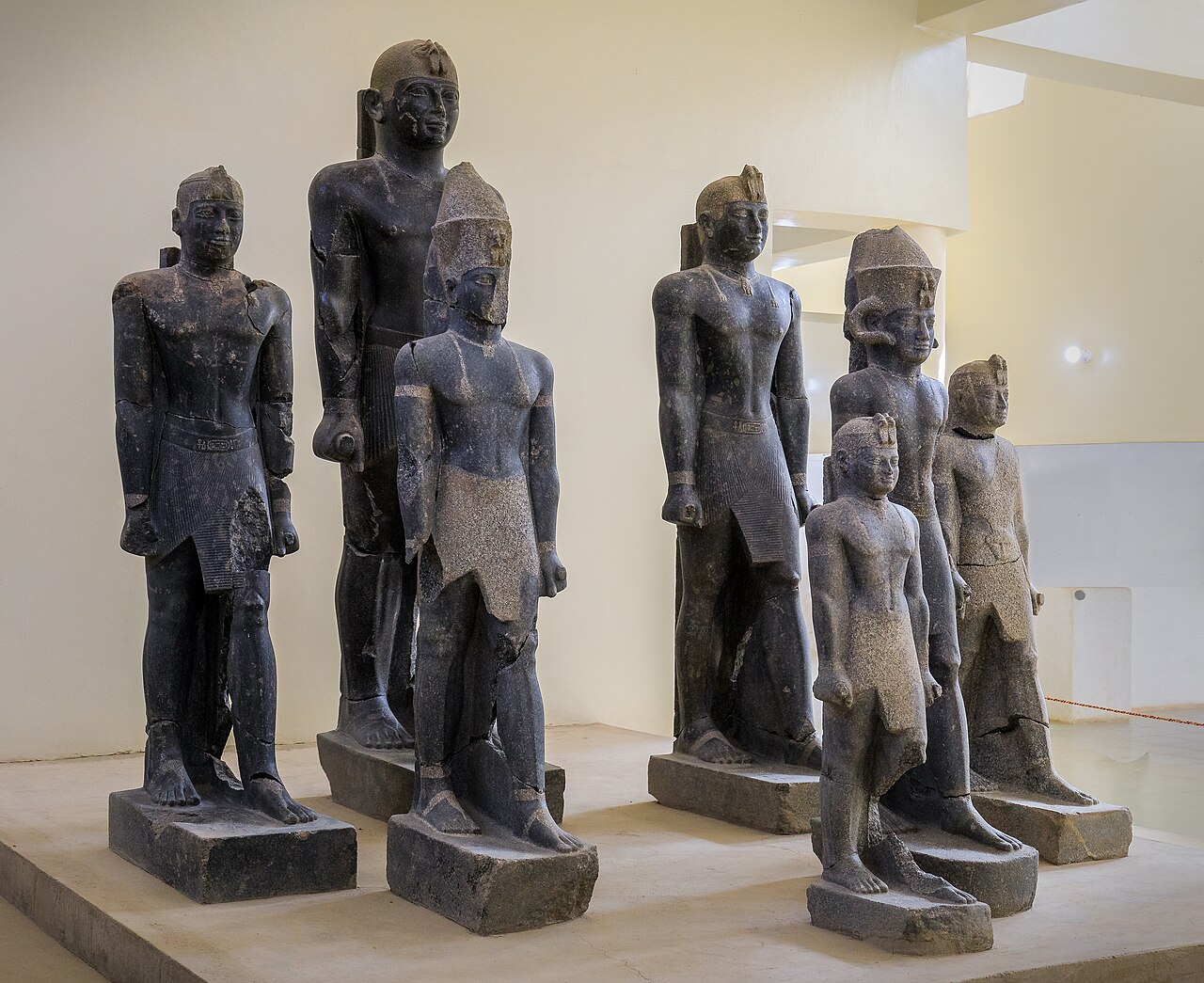
The kingdom reached its golden age when Kushite rulers accomplished what seemed impossible: they conquered Egypt and established the 25th Dynasty, ruling from approximately 747 to 656 BCE. This extraordinary period saw Kushite pharaohs controlling a vast empire stretching from the Nile delta south to the confluence of the Blue and White Niles.
King Piye (ruled circa 747-716 BCE) launched this remarkable chapter through a campaign he framed as a sacred mission to restore proper worship of the god Amun. His Victory Stele reveals a ruler of deep piety who paused military campaigns to celebrate religious festivals and expressed disgust upon discovering that defeated enemies had allowed their horses to starve. After unifying Egypt under his rule, Piye made the surprising decision to return to his capital at Napata in Nubia, governing his vast empire from the south rather than settling in Egypt’s traditional power centers.
King Taharqa (ruled circa 690-664 BCE) presided over the dynasty’s most glorious period. His 26-year reign brought unprecedented prosperity, with historical records noting bumper harvests and cultural flowering. Taharqa commissioned extensive building projects throughout Egypt and Nubia, including the famous colonnade at the Temple of Amun at Karnak. At Nuri, he built the largest pyramid ever constructed in Nubia, a monument to his power that still stands today.
Cultural Renaissance: Preserving Ancient Traditions
Rather than imposing foreign rule, Kushite pharaohs saw themselves as legitimate heirs preserving authentic Egyptian traditions that had lapsed under previous dynasties. The 25th Dynasty provided Egypt with a revival of its intellectual and artistic roots, restoring temples, reviving traditional art forms, and promoting worship of Amun with a fervor that resonated with conservative Egyptian religious authorities.
This cultural synthesis created a unique civilization that blended Nubian and Egyptian elements, producing distinctive art, architecture, and religious practices that would define Kushite identity for centuries.
The Warrior Queens: Female Power in Ancient Nubia
The Kandake Tradition
One of the Kingdom of Kush’s most distinctive features was its tradition of powerful female monarchs, known as Kandakes or Candaces. These weren’t ceremonial figureheads or regent queens ruling until male heirs came of age. Kushite Kandakes wielded absolute power, leading armies into battle, conducting diplomacy, and commissioning major architectural projects.
Women held important positions throughout Kushite society, with some serving as high priestesses of Amun. This level of female empowerment was rare in the ancient world and reflected deep cultural values about gender and leadership that set Kush apart from its contemporaries.
Queen Amanirenas: The One-Eyed Warrior
Queen Amanirenas (ruled circa 40-10 BCE) exemplified this warrior queen tradition when she faced history’s most powerful empire: Rome. When Roman Emperor Augustus attempted to impose tribute on Kush following his conquest of Egypt, Amanirenas responded with devastating military force.
Leading an army of 30,000 soldiers, she sacked the Roman garrison at Aswan and destroyed imperial statues at Philae, making it clear that Kush would bow to no foreign power. The Romans counterattacked, and in the brutal fighting that followed, Amanirenas lost an eye in combat. Rather than retreat, the one-eyed queen pressed her campaign.
Her warriors captured a bronze head of Emperor Augustus, and Amanirenas ordered it buried beneath a temple doorway in Meroe, ensuring that her people would literally walk over this symbol of Roman imperial power. This symbolic gesture spoke volumes about Kushite defiance and self-confidence.
The war ultimately ended in negotiation rather than conquest. Rome, stretched thin across its empire and facing fierce Kushite resistance, agreed to favorable terms. Augustus withdrew Roman forces from Kushite territory and waived all tribute demands. The treaty stands as one of the few instances where Rome backed down from territorial ambitions, testament to both Kushite military prowess and diplomatic skill.
Economic Powerhouse: Trade, Iron, and Innovation
The Wealth of Meroe
After the capital moved from Napata to Meroe around 300 BCE, the kingdom entered a new phase of prosperity. Meroe’s location offered strategic advantages, positioned between major trade routes and blessed with natural resources. The city became a center of iron production, with archaeological evidence revealing extensive smelting operations that made Kush a major supplier of iron weapons and tools.
The kingdom exported grains, cereals, iron implements, gold, ivory, and exotic animal products throughout the ancient world. This diversified economy generated wealth that funded elaborate royal tombs, monumental architecture, and a sophisticated urban culture.
Banking and Currency Systems
Kush developed advanced financial institutions that facilitated trade across its vast territory. The kingdom established banking systems and minted its own currency, demonstrating a level of economic sophistication that enabled complex commercial transactions and helped integrate diverse regions into a cohesive economic zone.
The Meroitic Script: An Indigenous Writing System
Around 700-600 BCE, Kushite scribes developed the Meroitic script, an indigenous writing system distinct from Egyptian hieroglyphics. This alphabet consisted of 23 characters and represented a major intellectual achievement. While scholars have successfully identified the phonetic values of Meroitic characters, the language itself remains only partially deciphered, meaning countless inscriptions still guard their secrets.
The development of an original writing system underscores Kushite cultural independence and intellectual vitality. This wasn’t a civilization merely imitating Egyptian culture; it was creating its own distinctive identity and means of expression.
Architectural Marvels: The Monuments of Kush
The Pyramids of Meroe: A Desert Wonder
The most iconic legacy of Kushite civilization stands in the Sudanese desert today: more than 200 uniquely Nubian pyramids, outnumbering those in Egypt. Located about 200 kilometers northeast of Khartoum, the Meroe necropolis contains two major pyramid fields. The northern cemetery showcases 23 pyramids, while the southern cemetery contains 10 pyramids.
These structures are distinctly different from their Egyptian counterparts. Kushite pyramids rise at steep angles of approximately 70 degrees, ascending from narrow footprints to heights ranging from 6 to 30 meters. The dramatic slopes give them an elegant, needle-like appearance quite different from Egypt’s massive monuments.
Each pyramid served as a royal tomb, with offering temple structures built at their bases. These temples featured unique Kushite architectural elements and reliefs depicting the deceased ruler making offerings to gods, receiving divine blessing, and journeying through the afterlife. The Meroe pyramids earned UNESCO World Heritage Site designation in 2003, recognizing their outstanding universal value.
Nuri: The Royal Necropolis
The pyramids of Nuri were built between 650 and 300 BCE and contain over 80 royal Kushite burials spread across more than 170 acres along the Nile. The most famous tomb belongs to King Taharqa, whose pyramid originally stood 160-180 feet tall, making it the oldest and largest pyramid in all of Nubia.
The Nuri necropolis showcases the evolution of Kushite royal burial practices and pyramid design. Later structures at Nuri refined architectural techniques, producing increasingly sophisticated tomb chambers and more elaborate decorative programs.
However, these ancient monuments now face a modern threat. In 2022, the Nuri pyramids were included in the World Monuments Watch’s list of 25 heritage sites of extraordinary cultural significance whose preservation is urgent. Rising groundwater levels, caused by changes in Nile hydrology and climate patterns, threaten to flood and destabilize the underground burial chambers.
Jebel Barkal: The Sacred Mountain of Amun
Jebel Barkal is a 341-foot-tall sandstone mesa situated about 400 kilometers north of Khartoum near the modern town of Karima. This natural rock formation held profound religious significance for the Kushites, who believed it was the dwelling place of the god Amun himself.
The sacred mountain became the religious heart of the Kushite kingdom. The sanctuary complex contains over 24 important buildings, including at least 13 temples, several chapels and kiosks, and at least three palaces. The largest structure is Temple B500, dedicated to Amun, measuring 46 by 160 meters.
The Temple of Mut, located on the western side of Jebel Barkal, features extraordinary wall murals chronicling King Taharqa’s coronation. These paintings, executed in white clay, ocher, and deep blue pigments, remain remarkably preserved and offer vivid glimpses into Kushite royal ceremonies and religious practices.
Pyramid fields surround Jebel Barkal, where some Kushite rulers chose to be buried in this sacred landscape. The site, along with El-Kurru, Nuri, Sanam, and Zuma, received UNESCO World Heritage Site designation in 2003 under the collective title “Gebel Barkal and the Sites of the Napatan Region.”
El-Kurru: Cemetery of the Dynasty Founders
El-Kurru served as the royal cemetery where early Kushite rulers were laid to rest in pyramids adorned with vibrant murals. This site contains the burials of four of the five members of the 25th Dynasty, their queens, and their ancestors, with some tombs dating back to about 900 BCE.
The cemetery includes the tombs of Kings Kashta (Piye’s father), Piye himself, Shabaka, and Tantamani. The burial chambers feature elaborate decorations showing the deceased rulers in the presence of various deities, offering precious insights into Kushite religious beliefs and royal ideology.
Other Significant Sites
Kerma: This ancient city predates the Kingdom of Kush, flourishing from around 2500 to 1500 BCE. Archaeological evidence suggests the site has been occupied for 8,000 to 10,000 years. Visitors can explore the remains of impressive deffufas—massive mud-brick structures that served religious and administrative functions.
Musawwarat es-Sufra and Naqa: Located on the “Island of Meroe” between the Nile and Atbara rivers, these sites represent two of the kingdom’s largest hinterland centers. They contain temples and other structures demonstrating the wealth and far-reaching influence of Kushite civilization beyond the capital.
The Decline of an Empire
The Kingdom of Kush began declining around the 3rd century CE due to multiple converging pressures. Environmental degradation played a major role, as extensive deforestation to fuel iron smelting operations led to soil depletion and reduced agricultural productivity. Climate changes also affected the region, altering rainfall patterns and agricultural yields.
Trade routes shifted as well, with Red Sea commerce increasingly bypassing Kushite territories. This economic marginalization reduced the kingdom’s wealth and influence.
The final blow came from the rising Kingdom of Axum in what is now Ethiopia. Around 350 CE, Axumite forces invaded and conquered Meroe, ending over 1,400 years of Kushite civilization. The last kings and queens faded into obscurity, their monuments slowly swallowed by desert sands.
Modern Challenges: Preserving Ancient Heritage
Climate Change and Environmental Threats
Today, the monuments of Kush face new dangers. The Meroe pyramids now endure increasingly fierce sandstorms whipped up by climate change, which threaten to erode delicate stone carvings and architectural details. Wind-blown sand acts like sandpaper, gradually wearing away inscriptions and reliefs that have survived for millennia.
Several pyramid tombs have collapsed over time due to structural degradation, treasure hunting, and environmental factors. The main north-south highway linking Khartoum and Port Sudan unfortunately separates parts of the Meroe site, creating negative visual and auditory impacts that detract from the monuments’ dignity.
Political Instability and Tourism
Sudan’s recent civil unrest and ongoing conflicts have dramatically reduced tourism to these sites. International visitors who once trickled to these remote monuments have virtually disappeared, depriving local communities of economic benefits and reducing global awareness of this extraordinary heritage.
The isolation also means fewer resources for conservation and less international pressure to protect these sites. Yet the monuments endure, waiting for the day when peace returns and visitors can safely witness their grandeur.
The Legacy of Kush: Why This Kingdom Matters
The Kingdom of Kush holds profound significance for understanding African history and challenging narrow narratives about ancient civilizations.
Africa’s First Sub-Saharan Literate Civilization
Kush represents the first literate, city-based civilization south of the Sahara. This achievement demonstrates that complex societies with writing, monumental architecture, and sophisticated governance emerged in Africa independently, not merely as outposts of Mediterranean civilizations.
A Bridge Between Worlds
Kushite civilization served as a crucial cultural and commercial bridge connecting sub-Saharan Africa with Mediterranean and Near Eastern civilizations. Trade goods, technologies, religious ideas, and artistic influences flowed through Kushite territories in both directions, facilitating cultural exchange across vast distances.
Challenging Historical Assumptions
The story of Kush challenges assumptions about power, gender, and cultural innovation in the ancient world. The tradition of warrior queens, the conquest of Egypt by African rulers, the development of an indigenous writing system—these achievements force us to reconsider oversimplified narratives about ancient history.
Cultural Pride and Identity
For modern Sudanese and Nubian people, the Kingdom of Kush represents a source of tremendous cultural pride. These monuments and this history provide a tangible connection to ancestors who built one of Africa’s greatest civilizations, offering a powerful counternarrative to colonial-era stereotypes that denied African societies historical depth and achievement.
Experience Nubian Heritage: A Call to Action
The monuments of ancient Kush stand today as testament to human ambition, creativity, and resilience. These pyramids, temples, and sacred sites belong not just to Sudan but to all humanity, representing irreplaceable treasures of our shared heritage.
Explore More About Nubian Civilization
Visit FeelNubia.com to discover more stories about Nubian history, culture, and heritage. From ancient kingdoms to contemporary communities, we celebrate the enduring legacy of Nubian civilization.
Support Heritage Preservation
These ancient monuments need our protection. Learn about organizations working to preserve Kushite heritage and discover how you can contribute to safeguarding these irreplaceable sites for future generations.
Plan Your Journey
When peace returns to Sudan, consider experiencing these wonders firsthand. The pyramids of Meroe, the sacred mountain of Jebel Barkal, and the royal tombs at Nuri await those adventurous enough to venture beyond conventional tourist trails.
Share This Story
Help spread awareness about the Kingdom of Kush and its extraordinary achievements. The more people who know this history, the greater the global commitment to preserving these monuments and honoring this civilization’s legacy.
Join the Conversation
Connect with fellow history enthusiasts, Nubian community members, and heritage advocates passionate about ancient African civilizations. Share your thoughts, questions, and discoveries as we collectively explore this fascinating chapter of human history.
Hashtags
#KingdomOfKush #NubianHistory #AncientAfrica #BlackPharaoh #FeelNubia #AfricanCivilization #MeroePyramids #SudanHeritage #WarriorQueens #Amanirenas #Taharqa #25thDynasty #NubianPyramids #JebelBarkal #AncientNubia #AfricanHistory #CulturalHeritage #UNESCOWorldHeritage #SudanTourism #NubianCulture #AfricanMonuments #AncientKingdoms #HistoryOfAfrica #NubianPride #HeritagePreservation
About FeelNubia
FeelNubia is dedicated to celebrating and preserving Nubian heritage, culture, and history. Through engaging storytelling, educational resources, and community connection, we honor the rich legacy of Nubian civilization from ancient times to the present day.
Visit us at FeelNubia.com to explore more stories, connect with our community, and celebrate Nubian heritage.
