
The Future Is Ancestral: Africa’s Ancient Architecture
 FN Policy Dialogue Series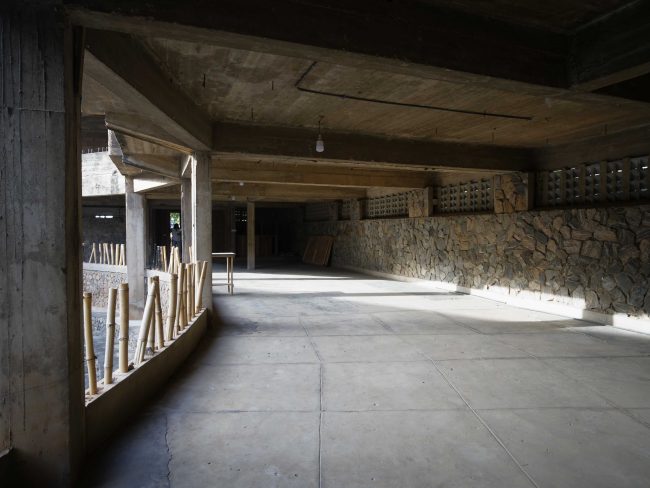
Africa’s ancient builders solved climate-responsive design millennia ago. Discover how earthen walls, dry-stone masonry, and indigenous wisdom are reshaping sustainable architecture today.
The world is running out of ideas. Cities are swelling. Temperatures are rising. The twentieth-century model of building (cheap energy, Portland cement, imported steel) is breaking down. Architects, engineers, and climate scientists are desperately searching for alternatives. They want buildings that cool themselves, use local materials, and stand for centuries.
Africa already has the answers. The continent’s ancient builders did not stumble upon sustainable design. They developed it deliberately (through generations of observation, experiment, and refinement) in some of the world’s most extreme climates. Their thermal engineering, passive ventilation systems, and locally sourced materials were not primitive guesses. They were complete, optimized solutions to the very problems modern construction is only now learning to ask.
Africa’s past is not a collection of historical footnotes. It is an operational manual for the planetary future.
Buildings That Outlast Civilizations
We talk about the “test of time” in architecture as if it were a metaphor. In Africa, it is a physical fact.
The Great Mosque of Djenné in Mali stands on foundations from the thirteenth century. In its current form since 1907 (but modelled on structures seven hundred years older), it is the largest earthen building on Earth. It has survived floods, the punishing Sahel heat, and centuries of seasonal rain. It does not fight its environment. It works with it.
Its walls reach three feet thick in places. They absorb heat slowly during the day and release it at night, keeping interiors cool with zero energy input. The protruding toron beams double as permanent scaffolding for annual community replastering — a maintenance system built directly into the design. The mosque does not need saving. It saves itself.
Great Zimbabwe’s dry-stone enclosures have stood since the eleventh century. No mortar. No steel reinforcement. No concrete. Stones quarried and fitted with such precision that walls eleven metres tall and five metres thick hold together through the geometry of their relationship alone. Nine hundred years of structural performance. That is mastery at its finest.
The rock-hewn churches of Lalibela in Ethiopia, carved from solid volcanic rock in the twelfth and thirteenth centuries, have required zero structural maintenance in eight hundred years. They cannot deteriorate — they are the rock. By carving downward into the living earth, Lalibela’s builders created structures that are geologically fused with their sites, thermally stable by sheer mass, and immune to the differential settling that destroys modern foundations.
By contrast, a standard reinforced concrete building is designed to last fifty to one hundred years. Steel corrodes fast in tropical humidity. Glass curtain walls in equatorial sun create interiors that are physiologically dangerous without constant air conditioning. The buildings Africa erected in the post-independence 1960s and 70s are already hitting structural obsolescence. The earthen mosques of Mali are entering their eighth century of active use.
Earth, Clay, and the Physics of Cooling
Of all African ancient building technologies, earthen construction makes the most urgent case. Clay building predates writing, the wheel, and metallurgy. Across the Sahel, the Niger Basin, the Horn, and the southern savannahs, it evolved over millennia into one of the most sophisticated sustainable technologies ever devised.
The physics are straightforward. Dense earthen walls absorb heat slowly as temperatures rise during the day. The heat does not reach the interior until nightfall, when outside temperatures have already dropped and the stored heat can radiate harmlessly outward. In climates with hot days and cooler nights (most of Sub-Saharan Africa), this creates a natural temperature-moderating engine that requires no electricity, no maintenance, and no imported components. Well-designed earthen buildings in the Sahel maintain interiors ten to fifteen degrees cooler than the outside air at peak afternoon heat.
This is thermodynamics — the same principle validated by modern computational fluid dynamics and peer-reviewed building science. Earthen construction delivers what billions of dollars of air conditioning infrastructure attempts: thermal comfort in tropical climates. It does so at zero ongoing energy cost, zero carbon emissions, and with materials that cost nothing beyond the labour to shape them.
The Carbon Argument Is Overwhelming
Portland cement production accounts for roughly eight percent of global CO2 emissions each year. Every tonne of cement clinker releases approximately 0.9 tonnes of CO2. Africa’s construction boom, built on conventional cement and steel, risks making the continent a major driver of the climate disruption that’s threatening its own cities and food systems.
Earthen construction has a carbon footprint close to zero. Dig the material from the ground. Shape it. Dry it in the sun. No kiln, no chemical processing, no overseas shipping. When an earthen building reaches the end of its life (potentially several centuries later), its materials return harmlessly to the earth. The concept of a closed loop so perfectly circular makes modern “sustainable” construction look like what it is: a marketing term for a destructive process.
Earth walls also regulate indoor humidity automatically. They absorb moisture when air is damp and release it when air is dry — reducing respiratory illnesses in overcrowded, poorly ventilated low-cost housing. Ancient African builders did not know the word hygroscopic. They just knew earthen houses were healthier to live in. Science has since confirmed what lived experience had always demonstrated.
Demas Nwoko and the Art of Natural Synthesis
No single figure brings this conversation into sharper focus than Demas Nwoko — painter, sculptor, theatre designer, cultural philosopher, and master builder, born in 1935 in Idumuje-Ugboko, Delta State, Nigeria.
Nwoko came to architecture not through formal training but through art — a painter’s feel for material and form, a stage designer’s command of space and atmosphere. When he received his first architectural commission in the mid-1960s, he taught himself structural drawing. The result was a body of work free from the colonial epistemology embedded in Western architectural education: simultaneously more rigorous in its science and more authentic in its culture.
His central contribution is what he calls Natural Synthesis. Nwoko argues that the division between “modern” and “traditional” knowledge is itself a colonial construct — a hierarchy designed to de-legitimize indigenous systems and create permanent dependency on imported ones. Natural Synthesis dissolves that hierarchy. It treats Yoruba spatial logic and Newtonian structural mechanics as equally valid inputs into the same design problem.
When Nigerian building regulations of the 1960s prohibited unstabilized laterite (the iron-rich clay that underlies much of West Africa) in permanent construction, Nwoko responded by inventing Latcrete: a composite of local laterite earth and a minimal proportion of cement that meets structural codes while retaining the thermal, aesthetic, and cultural properties of the ancestral material.
His Dominican Institute Chapel in Ibadan, completed in 1975, proves the concept. Terracotta-red Latcrete walls provide deep thermal mass. Sand-cast decorative screens shade the interior and ventilate it simultaneously. Massive overhanging eaves protect wall faces from direct solar gain. The spatial organization draws on Yoruba compound logic to create a sequence of shaded transitional spaces between the tropical heat outside and cool interior air within. No air conditioning. No imported materials of significance. Over fifty years of continuous, comfortable use.
In 2023, the Venice Biennale awarded Nwoko its Golden Lion for Lifetime Achievement. The jury described his buildings as “forerunners of the sustainable, resource-mindful, and culturally authentic forms of expression now sweeping across the continent and the globe.” Forerunner is the right word — but what he was running toward was the past. A tradition interrupted by colonialism that the planet now urgently needs to resume.
A Global Architecture Emergency — and Africa’s Answer
The stakes are planet-wide, not regional. As global temperatures rise, the proportion of humanity living in climates where passive cooling is not merely preferable but physiologically necessary will grow dramatically. Sub-Saharan Africa, South Asia, Southeast Asia, the Middle East — billions of people in climates where heat disrupts productivity, powered by electricity grids burning the fossil fuels making those climates hotter still. The only exit from that spiral is buildings that do not need mechanical cooling. Africa has been building those buildings since before the Common Era.
The numbers make the urgency concrete. Africa will add approximately one billion urban residents by 2050. House them in standard concrete and glass buildings dependent on imported materials and mechanical climate control, and the carbon and energy cost will be catastrophic. House them in buildings designed on African building principles (earthen walls, passive ventilation, courtyard forms, local materials), and the outcome is radically different: one billion people in structures that are thermally comfortable, structurally durable, materially sovereign, and climatically neutral.
The gap between those two futures is not technology. The technology for the second future is already proven — over millennia. The gap is political will and humility, educational priority, and cultural confidence.
The global architecture establishment is starting to notice. In 2022, the Pritzker Prize (the field’s highest honour) went to Francis Kéré of Burkina Faso, the first African architect to win it. His Gando Primary School, built from compressed earth brick with an elevated roof creating thermally driven natural ventilation, is now taught in architecture schools across Europe and North America as a masterclass in passive climate design.
In Niger, Mariam Kamara of Atelier Masomī designs contemporary libraries and civic spaces in compressed earth, drawing on Hausa spatial tradition to create buildings that are climatically self-sufficient, culturally grounded, and structurally current. Across the continent (in Burkina Faso, Nigeria, Ethiopia, Rwanda), a generation of architects trained in Western institutions but rooted in African building knowledge is producing work that synthesizes both. This might be the most significant development in global sustainable architecture.
Watch FeelNubia’s interview with Nmadili Okumabua of CPDI on codifying Afrocentric design language.
Reading the Blueprint: What Must Change Now
The ancient builders of Africa left a blueprint. It is not written in any text. It is written in the buildings themselves. In the thermal mass of earthen walls that have regulated interior climates for seven centuries, in the dry-stone precision of enclosures standing for nine hundred years without mortar, in the rock-carved interiors that have needed no structural repair in eight hundred years. Reading that blueprint is urgent practical intelligence not mere romanticism.
Acting on it requires several simultaneous moves. Building codes across the continent must be revised. The colonial-era regulatory bias toward imported materials (still blocking African builders from using their own earth in permanent construction) must end. Architecture schools must redesign their curricula so African building traditions are treated as primary knowledge, not peripheral context. The next generation of African architects must design from their own knowledge base.
Governments and development institutions must invest in the material science infrastructure needed to scale earthen and local-material construction to volumes that match Africa’s urbanization. And the communities that carry living knowledge of traditional building techniques: the masons working in laterite and coral stone, the craftspeople who still know the toron, the elders who remember the spatial logic of the compound, must all be recognized as custodians of the ancient knowledge systems, repairing the breach between the past and the present, using it to restore the paths that lead to a better future.
The world, for its part, needs to confront a simple truth: the most important sustainable building knowledge on Earth is not being produced in European research labs or American architecture schools. It was produced in Africa, over four thousand years, by builders who had no choice but to get it right and every incentive to make their solutions last. It’s been tested.
It lasted. The mosques of Mali are entering their eighth century. The churches of Lalibela, their ninth. The walls of Great Zimbabwe, their tenth. The modern world builds for fifty years and calls it permanent. Africa has standing proof of what permanent actually looks like.
It is time the world paid attention.
